Key Takeaways
-
Ash scattering ceremonies on the water must occur at least 3 nautical miles offshore in ocean waters, with EPA notification required within 30 days to ensure legal compliance.
-
Choose an experienced memorial charter provider familiar with legal requirements and respectful ceremony positioning, rather than general sightseeing boat services, to ensure a dignified experience.
-
Keep the ceremony simple with 60-90 second personal memories from speakers, allowing flexibility for poems, music, or direct address to the deceased rather than following a rigid script.
-
Select between biodegradable urns that dissolve gradually (offering visual focus) or direct hand scattering (providing immediate symbolic release), ensuring only natural materials enter the water to protect marine life.
-
Add personal touches like loose flower petals, a loved one's favorite music, or a meaningful poem to transform the moment into an unforgettable tribute that honors their life.
-
Allow extra time on the water after scattering for families to sit quietly, share stories, or begin processing emotions before returning to shore, supporting the healing transition.
Saying goodbye to someone you love is never easy. But when that person loved the water, a boat can offer something a funeral home never can: open sky, gentle waves, and the kind of peace that only the Gulf Coast breeze can bring. A meaningful ash scattering ceremony on the water gives families a chance to honor a life while finding a little closure of their own. If you are just starting to plan one, take a breath. We are going to walk through everything step by step, so you feel prepared and supported.
At Gulfside Adventures, based in Indian Rocks Beach, Florida, our team has helped many families create gentle, respectful memorial charters on the Gulf. We know this is likely one of the harder days you will plan, and we want to make sure you feel informed, cared for, and never rushed.
Why Families Choose Water Scattering Ceremonies
Water has always carried a sense of peace, renewal, and continuity. For many families, scattering ashes on the water feels more fitting than a traditional burial, especially if their loved one spent weekends fishing, sailing, or simply relaxing by the shore.
A ceremony on a private boat also offers something a crowded beach cannot: privacy. You get quiet time with close family, away from onlookers, with nothing but open water around you. Many of our guests at Gulfside Adventures tell us this setting helps them feel calm during a hard moment, and gives them a positive memory to hold onto alongside the grief.
The Emotional Benefits of a Water Ceremony
- A sense of release and letting go, symbolized by ashes drifting into open water
- Privacy for family and close friends without public attention
- A calming, natural setting that softens a difficult day
- Flexibility to personalize the service with music, readings, or flowers
- A lasting memory tied to the beauty of Florida’s Gulf Coast
Is It Legal to Scatter Ashes From a Boat?
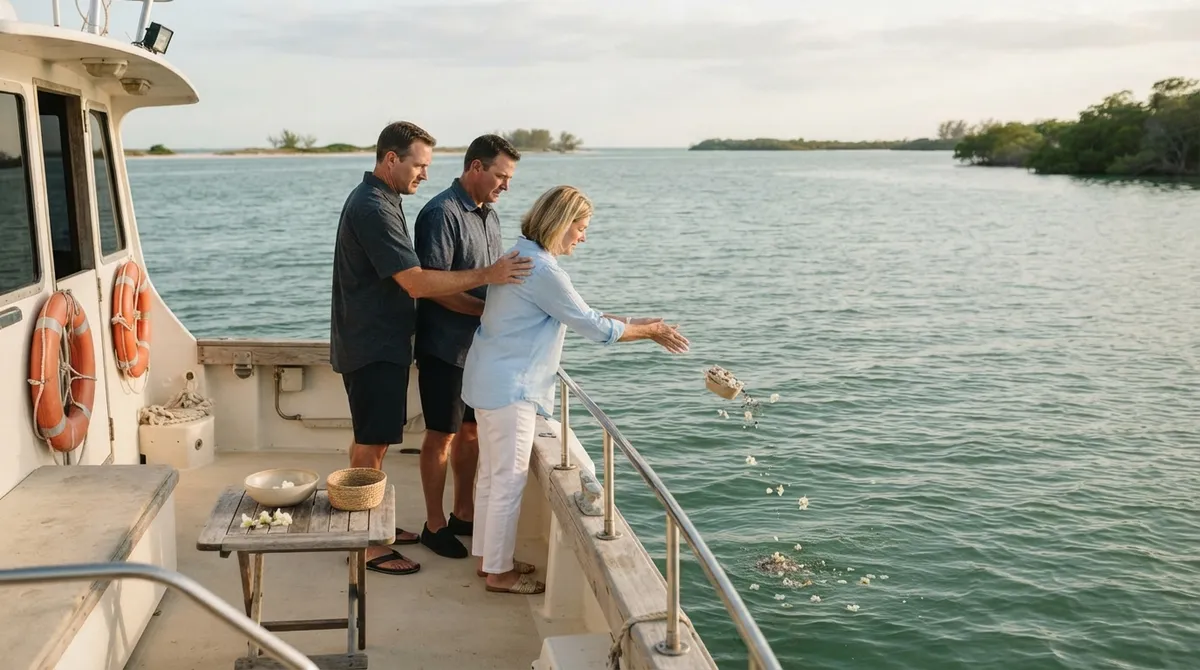
This is one of the most common questions families ask us, and it is a smart one to ask early. Yes, scattering ashes from a boat is legal in the United States, but there are rules to follow.
According to guidance often cited from the EPA’s Marine Protection, Research, and Sanctuaries Act, cremated remains must be scattered at least three nautical miles from shore in ocean waters. After the ceremony, the EPA generally asks to be notified within 30 days. A trusted, experienced charter crew will already understand these requirements and can guide your family so nothing falls through the cracks.
Ocean vs. Inland Water Rules
| Water Type | Typical Rule | Notes |
|---|---|---|
| Ocean or Gulf Waters | At least 3 nautical miles offshore | EPA notification generally expected within 30 days |
| Lakes and Rivers | Varies by location | May require permission from local authorities or site managers |
| Private Charter Waters | Follows captain’s guidance | Experienced crews know local and federal rules |
Because inland water rules can be inconsistent, most families choose to scatter in the Gulf. It removes the guesswork and gives you wide, open water that feels truly peaceful. Our Burial of Ashes Charter Clearwater service was built with these exact rules in mind, so your family can focus on the moment instead of the paperwork.
Planning Your Ceremony Step by Step
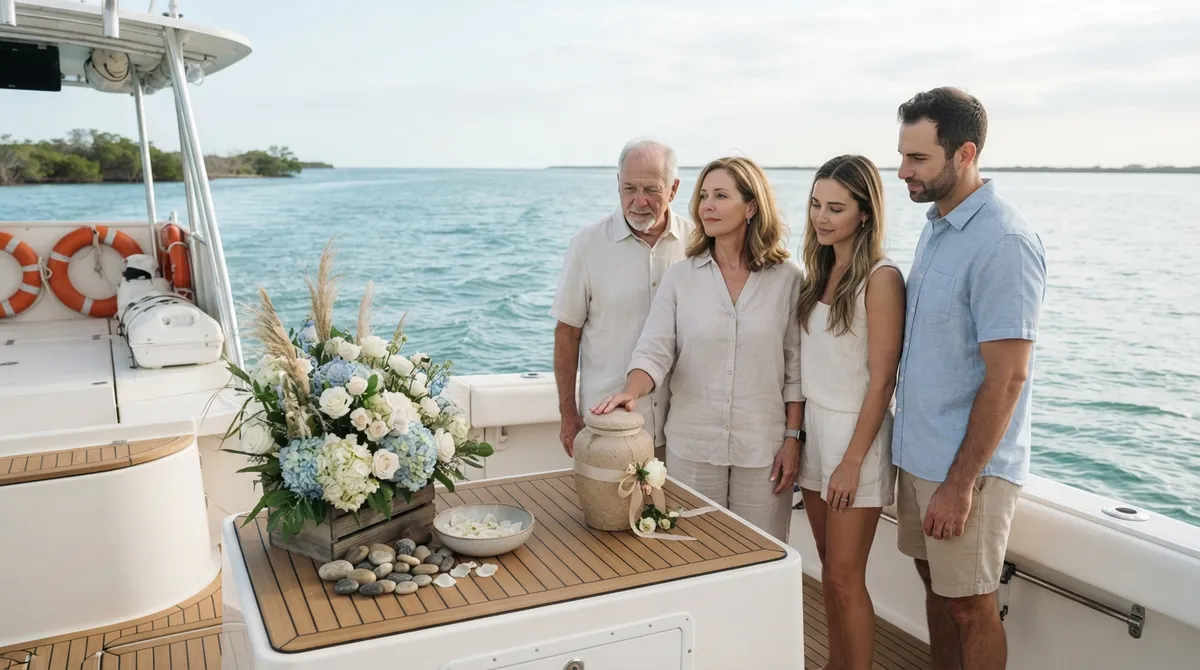
A water ceremony does not need to be complicated. In fact, keeping things simple often makes the moment feel more genuine. Here is a straightforward outline many families follow.
- Choose your vessel and date. Pick a boat charter with enough space for your group, and a date that works for close family and friends.
- Decide who will speak. Ask a few people to share short memories, around 60 to 90 seconds each, so the service stays warm and unhurried.
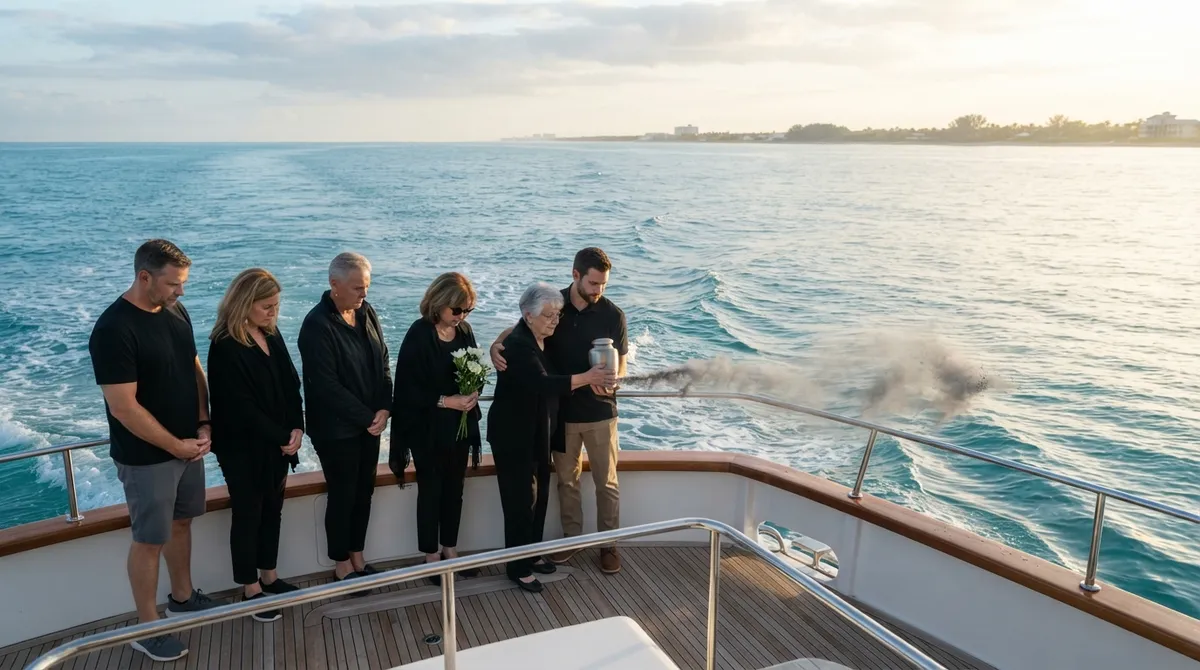
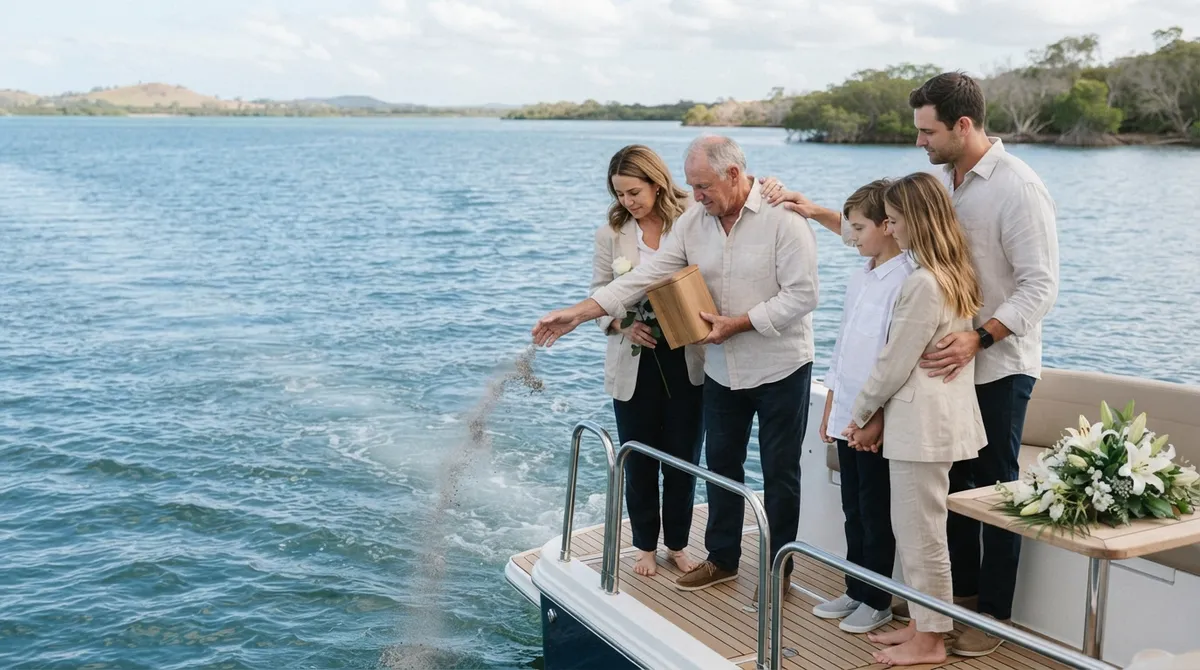
- Select your scattering method. Some families release ashes directly into the wake, while others use a biodegradable or water-soluble urn that floats briefly before dissolving.
- Add personal touches. Bring flowers, a favorite song, or a poem that reflects your loved one’s personality.
- Plan a moment of silence. Even five seconds of quiet before the scattering can add weight and reflection to the ceremony.
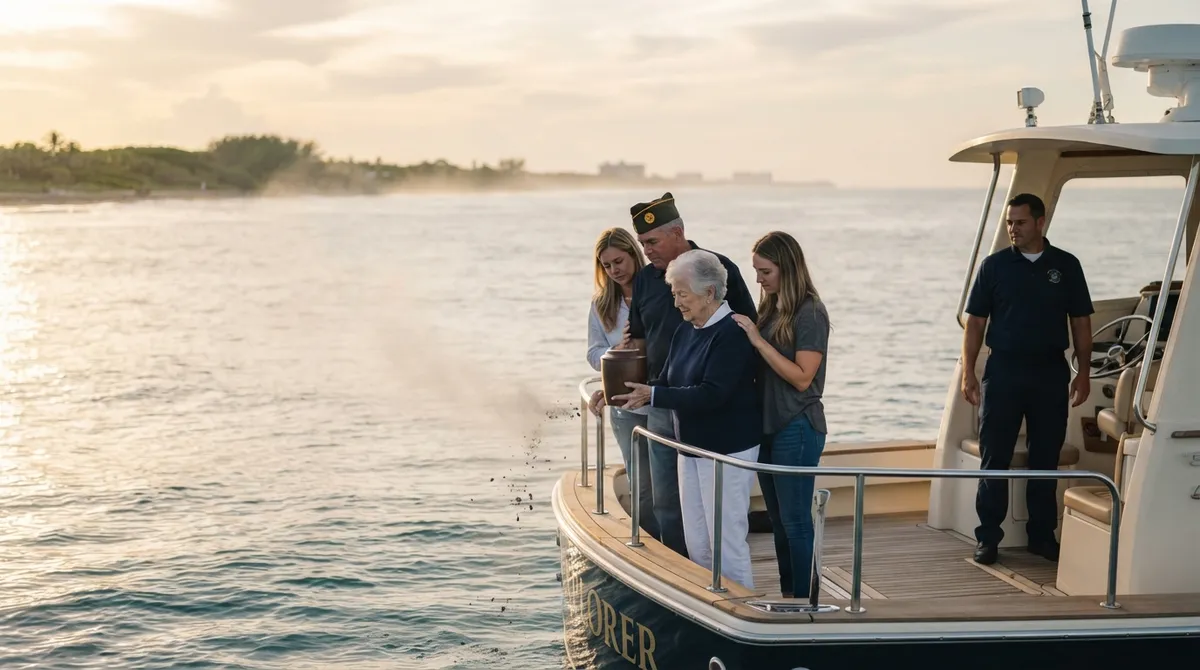
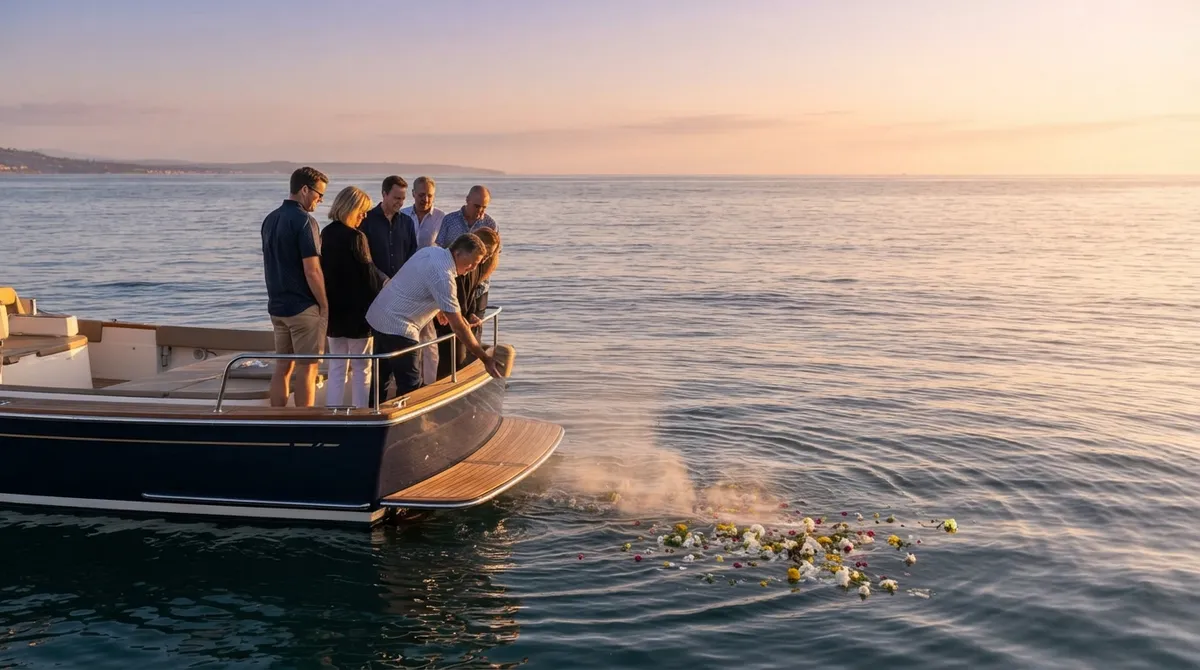
- Let the ashes drift naturally. A good captain will position the boat so wind and current carry the ashes away from guests, keeping the moment respectful and clean.
If you want more detailed guidance, our article on how to scatter ashes at sea with dignity and peace offers additional tips for families planning this kind of service.
What to Say During the Ceremony
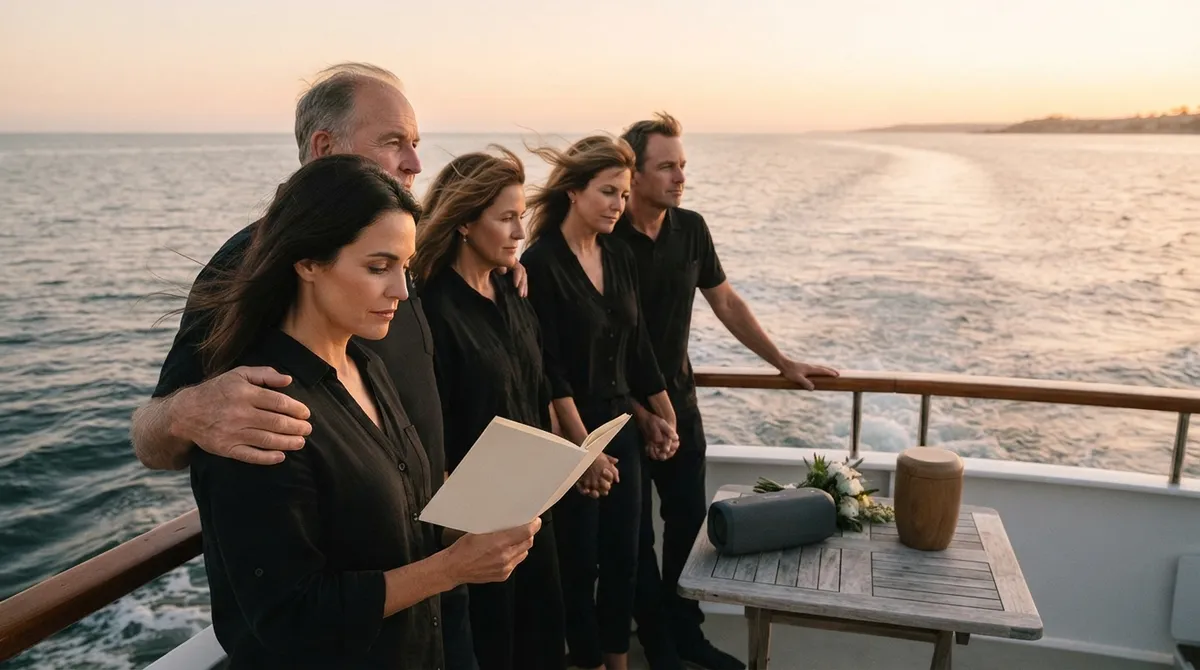
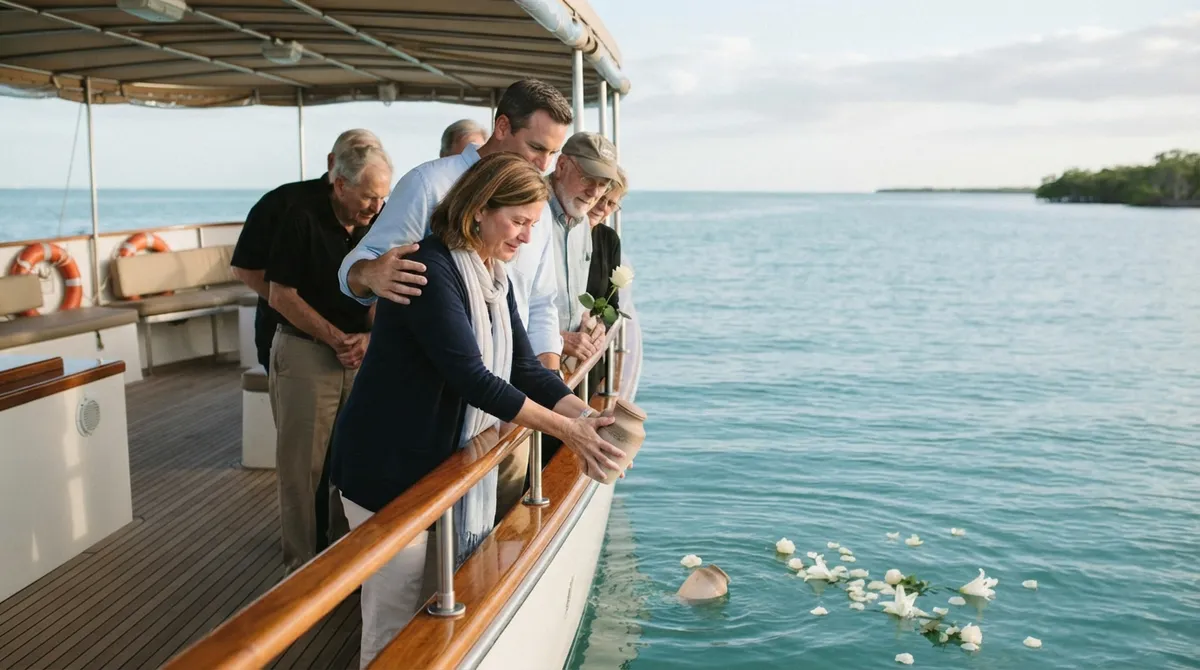
Many families worry about finding the “right” words. The truth is, there is no perfect script. Simple, heartfelt words are usually the most memorable.
- Share a specific memory instead of a general statement
- Speak directly to your loved one, as if they can hear you
- Read a short poem, prayer, or favorite quote
- Invite others to add a sentence or two if they feel comfortable
- End with a simple phrase like “fair winds” or “safe travels”
If public speaking feels overwhelming, that is completely normal. Many families ask one person to read a short passage on behalf of the group, which takes the pressure off everyone else.
Choosing Between an Urn and Direct Scattering
Not every scattering looks the same, and that is okay. Some families prefer a biodegradable urn, while others scatter ashes directly by hand. Both options are meaningful.
Biodegradable Urns
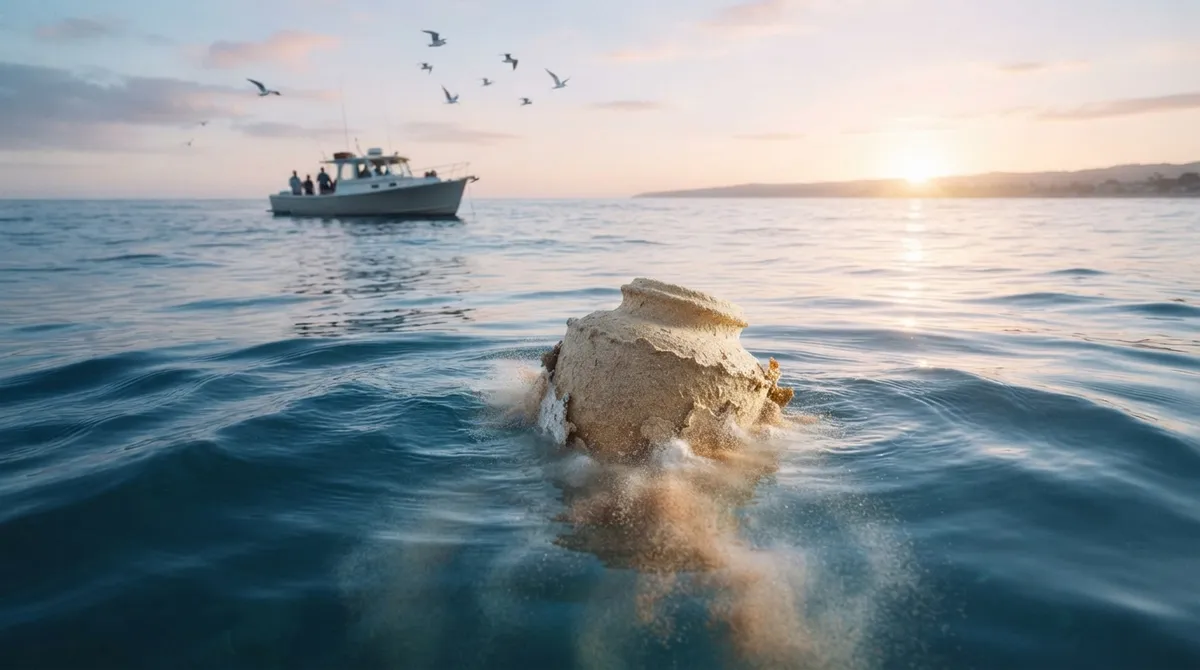
A water-soluble urn floats on the surface for a short time before gently dissolving. Many families like this option because it feels ceremonial and gives everyone a visual moment to focus on. It is different from scattering loose ashes directly from the boat, and some people find it easier emotionally.
Direct Scattering
Direct scattering is simple and immediate. The ashes are released by hand or with a scattering tube, allowing them to disperse quickly into the water. This method works well for families who want a quick, symbolic release.
Whichever method you choose, only biodegradable materials should ever enter the water. Plastic containers, ribbons, or non-biodegradable decorations can harm marine life and go against basic water-scattering etiquette.
Adding Flowers, Music, and Personal Touches
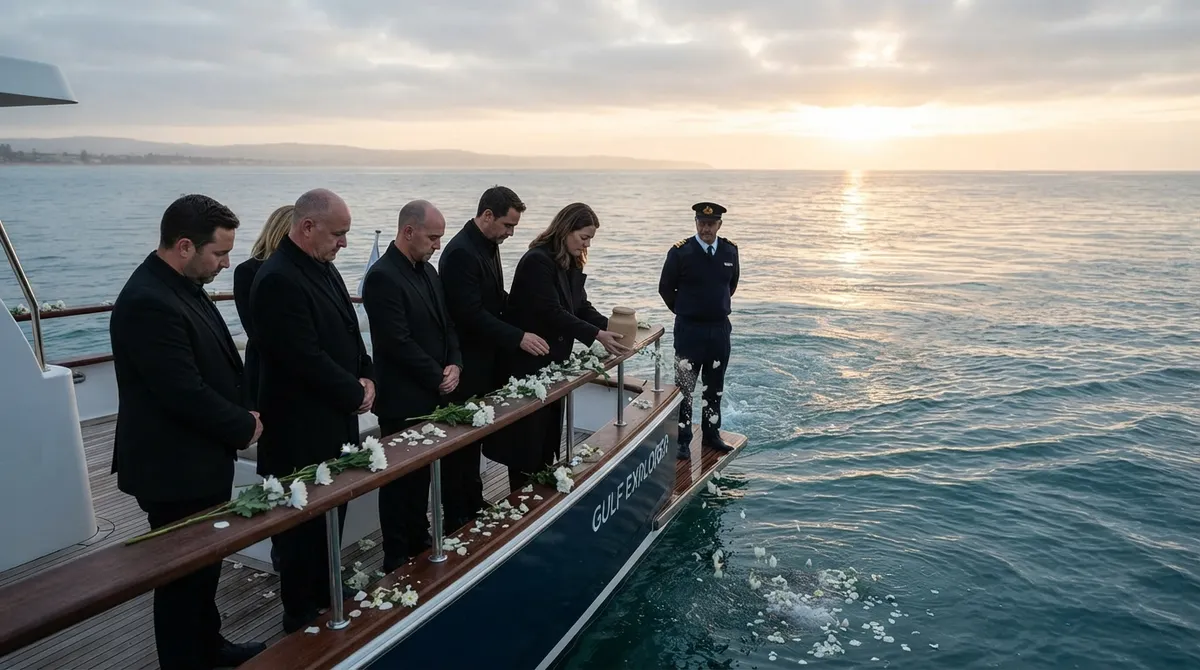
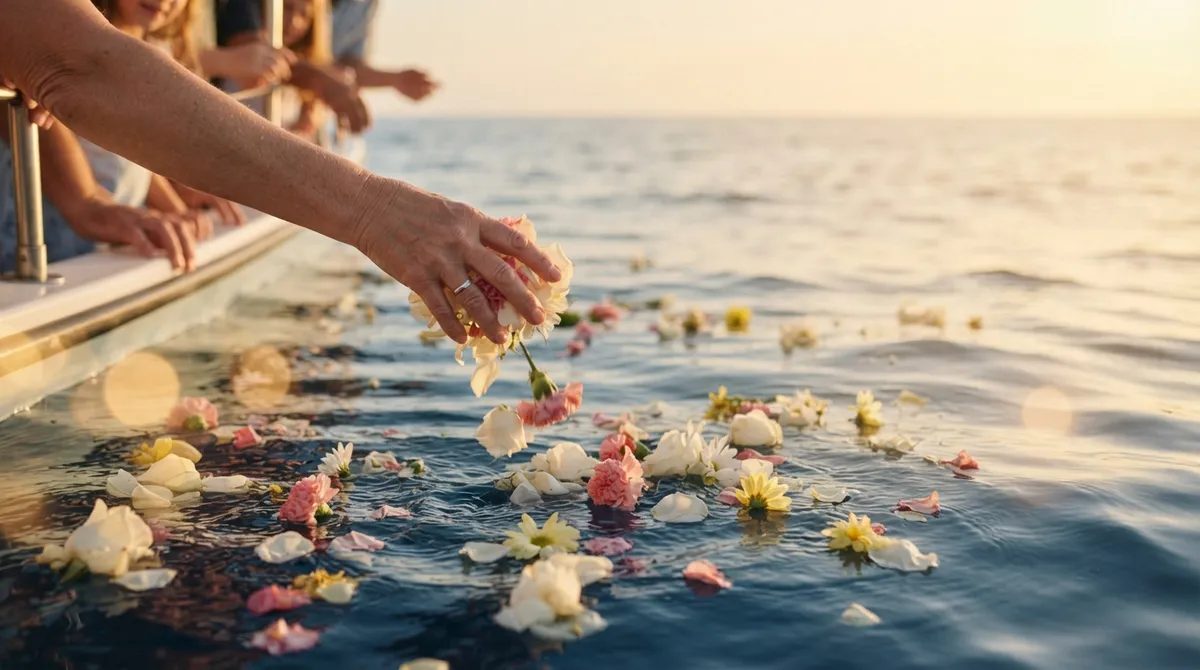
Flowers are one of the most common additions to a water scattering ceremony. Loose petals are biodegradable and drift beautifully on the surface. Wreaths made from natural materials can also be released, adding a gentle visual tribute as the boat moves away.
Music adds emotional depth too. A quiet instrumental song playing softly in the background, or a favorite tune your loved one enjoyed, can turn a simple moment into something unforgettable. Many families on our Small Boat Charter trips choose to bring a small speaker for this reason.
What Happens After the Ashes Are Scattered
Once the ceremony is complete, most families take a few extra minutes on the water. Some sit quietly. Others share stories, laugh a little, and start to feel lighter. There is no need to rush back to shore right away.
If ashes were scattered in ocean waters at least three nautical miles out, the captain or family may need to file the EPA notification within 30 days. A knowledgeable charter crew can walk you through this so you are not left wondering what comes next.
Choosing the Right Charter for Your Ceremony
Not every boat charter is set up to handle a memorial service with care. Look for a provider with real experience in this specific type of trip, not just general sightseeing tours.
| What to Look For | Why It Matters |
|---|---|
| Experience with memorial charters | Captains know legal distance requirements and respectful positioning |
| Private, small-group setting | Keeps the ceremony intimate and free from outside distractions |
| Flexible scheduling | Allows families to choose a calm weather window |
| Comfortable seating and shade | Supports guests of all ages, including elderly family members |
At Gulfside Adventures, our team has spent over a decade guiding families through these meaningful moments on Florida’s Gulf Coast. You can read about other families’ experiences through our Reviews page, or see what guests have shared on Trip Advisor. We also encourage you to look at our Gulfside Adventures location on Google to see photos and feedback from other families we have served near Indian Rocks Beach and Clearwater.
Tips for a Smooth, Respectful Ceremony
- Check the weather forecast a few days ahead and stay flexible with your date
- Keep the guest list small and intimate for a more personal experience
- Bring tissues, water, and a light jacket for guests who may get emotional or cold
- Ask the captain about the best time of day for calm water conditions
- Consider a sunrise or sunset timing for extra symbolism
Many families also choose to combine the ceremony with a small gathering afterward, sharing food or stories back on shore. This can help ease the transition from a solemn moment to a celebration of life. For families exploring other water-based memorial options, our guide on alternative funeral service options on the water covers a few more ideas worth considering.
Bringing It All Together
Planning a meaningful ash scattering ceremony on the water does not have to feel overwhelming. With the right charter, a little preparation, and a few personal touches, you can create a peaceful farewell that truly honors your loved one. Whether you choose loose petals, a biodegradable urn, or a favorite song playing softly across the water, what matters most is the love behind the moment.
If you are ready to start planning, our team at Gulfside Adventures is here to help every step of the way, from choosing the right vessel to understanding offshore requirements. Reach out to our team today to talk through your family’s needs and find a date that feels right for everyone.
FAQs
Q: Is it legal to scatter ashes from a boat?
A: Yes, it’s completely legal in the U.S. as long as you follow a few simple rules. For ocean waters, you’ll want to be at least three nautical miles offshore, and the EPA generally asks to be notified within 30 days after the ceremony.
Q: How far offshore do you need to be to scatter ashes at sea?
A: Most guidance points to at least three nautical miles from shore for ocean scattering. An experienced charter captain will already know this distance and can get your family there safely and comfortably.
Q: Do you need a permit for ash scattering on a lake or river?
A: It depends on the location, since inland water rules vary quite a bit from place to place. Some lakes and rivers require permission from local authorities, so it’s always smart to check ahead of time or choose Gulf waters for a more straightforward process.
Q: What should be said during an ash scattering ceremony on the water?
A: There’s really no wrong answer here, simple and heartfelt words go a long way. Many families share a short memory, read a favorite poem, or just say a quiet goodbye, often keeping each person’s turn to about 60 to 90 seconds.
Q: What is a biodegradable urn for water scattering?
A: It’s a special urn made from natural materials that floats briefly on the water before gently dissolving. It’s a lovely alternative to direct scattering and gives families a peaceful visual moment to focus on during the ceremony.