Key Takeaways
-
Federal law requires vessels to travel at least three nautical miles from shore before scattering ashes, but no advance permit is needed—only EPA notification within 30 days, which most charter companies handle for you.
-
Choose between attended scattering ($375–$1,800+) with family present or unattended scattering ($100–$425) performed by captain alone, depending on your budget and whether family can gather.
-
Always cast ashes downwind to prevent them from blowing back toward guests, and schedule morning or early afternoon departures when sea conditions are calmest for safety and comfort.
-
Use only biodegradable materials like eco-friendly urns and pesticide-free flowers; plastics and non-biodegradable containers violate EPA regulations and harm the marine environment.
-
After the ceremony, request GPS coordinates and a burial certificate from your captain—these official records allow absent family members to know the exact location and enable yearly remembrance visits.
-
Personalize the ceremony by playing favorite songs, reading poems or letters, sharing memories, or floating flowers alongside the ashes to create a meaningful, unique tribute.
Saying goodbye to someone you love is never easy. But there is something deeply peaceful about honoring a life well-lived on the open water. Scattering ashes at sea is a beautiful, meaningful tribute that more families are choosing every year. The gentle waves, the open sky, and the quiet hum of a boat engine create a setting unlike any other. Whether your loved one was a sailor, a beach lover, or simply someone who found peace near the water, a sea scattering ceremony can feel like the most fitting farewell of all.
If you are wondering how to scatter ashes at sea, you are in the right place. This guide walks you through everything — from legal requirements to choosing the right charter — so your ceremony is as smooth, respectful, and meaningful as possible.
Understanding the Legal Requirements
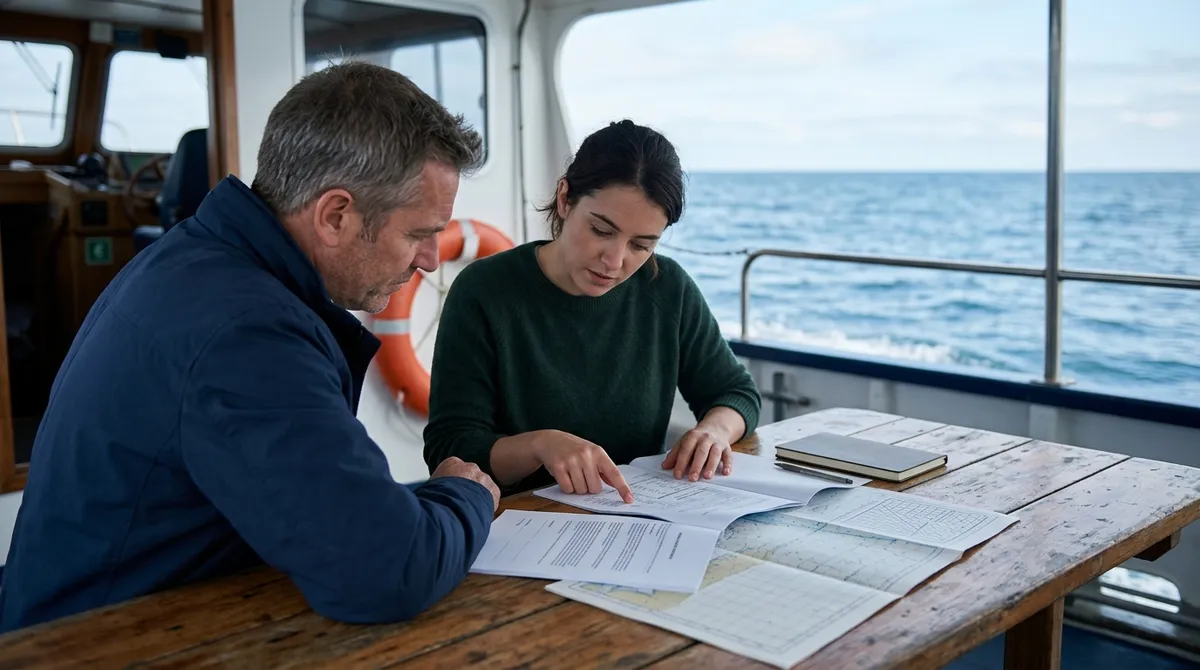
Before anything else, it helps to know the rules. In the United States, federal law allows families to scatter cremated remains at sea. However, there are a few important guidelines to follow. These rules are set by the U.S. Environmental Protection Agency (EPA) under the Marine Protection, Research, and Sanctuaries Act.
Here is what the law requires:
- The vessel must travel at least three nautical miles from shore before scattering
- Families do not need advance permission or a permit
- You must notify the EPA within 30 days after the ceremony takes place
- Only biodegradable materials may be placed in the water (flowers, biodegradable urns, etc.)
- No plastics, non-biodegradable containers, or harmful materials may be used
Most reputable boat charter companies handle EPA notification on your behalf or walk you through the process. To learn more about planning a ceremony that meets all requirements, visit this helpful resource on how to plan a meaningful burial at sea charter.
Attended vs. Unattended Scattering Services
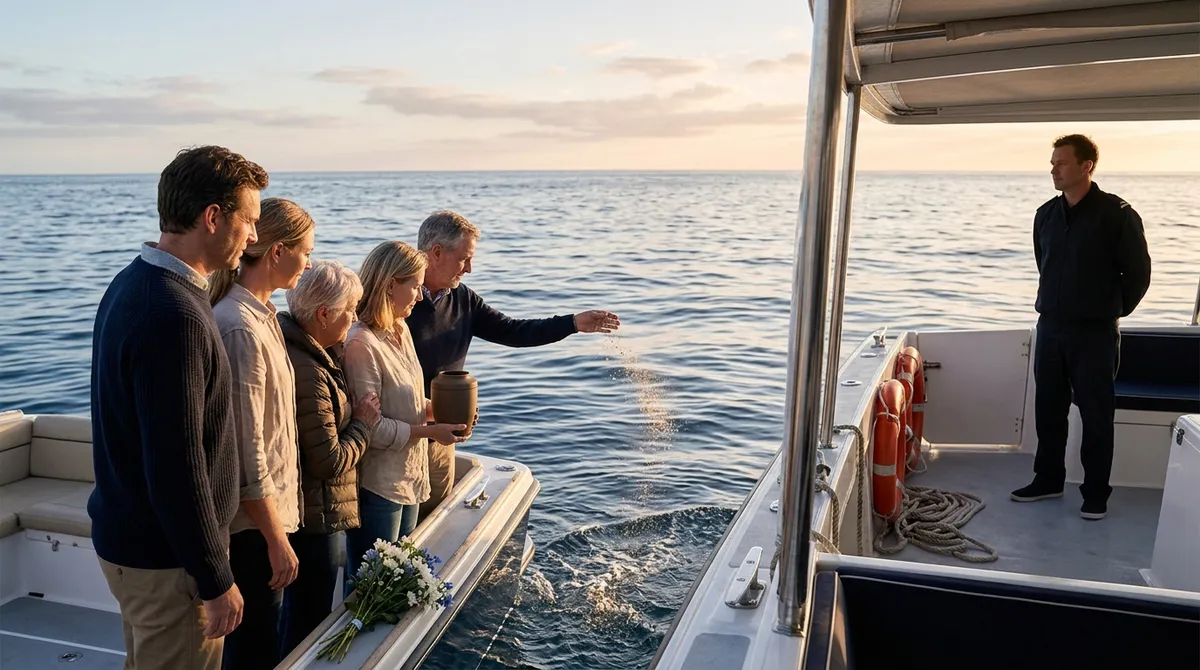
One of the first decisions you will make is whether you want to be present for the ceremony. Charter companies offer two main types of services, and both are valid choices depending on your needs and circumstances.
| Service Type | Who Is Present | Typical Cost Range | Best For |
|---|---|---|---|
| Attended Scattering | Family and friends join the ceremony | $375 – $1,800+ | Groups wanting a shared, personal experience |
| Unattended Scattering | Captain performs the service alone | $100 – $425 | Smaller budgets or remote family situations |
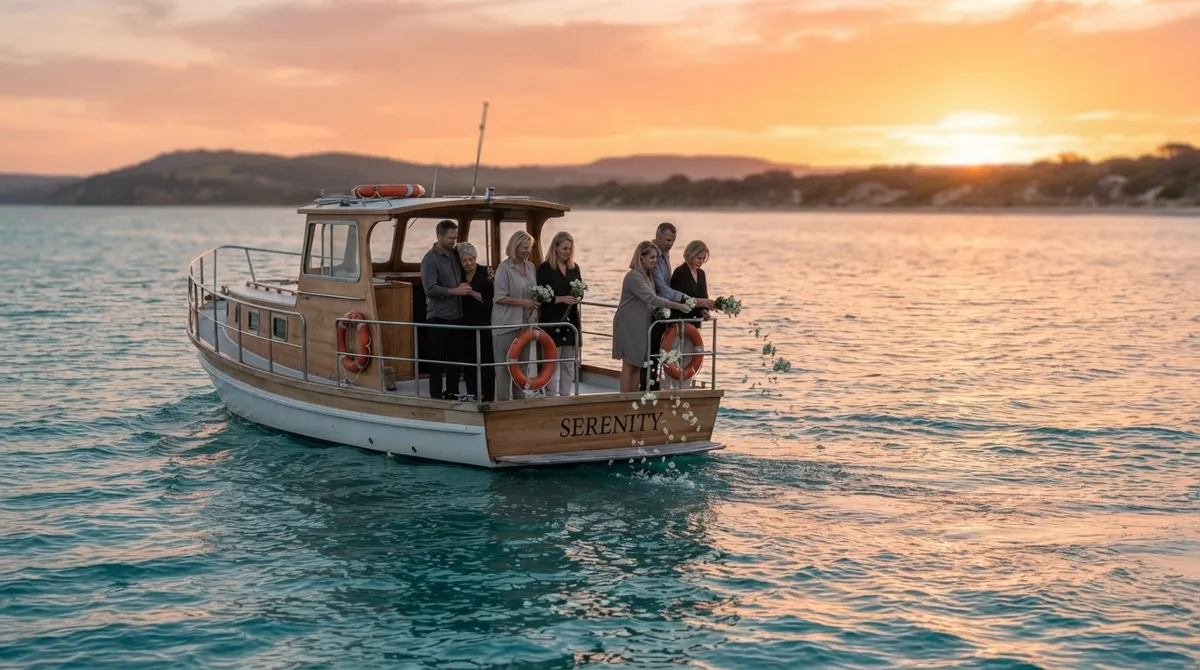
An attended scattering allows your whole family to be together on the water. You can read poems, play music, say prayers, and share memories as the ashes are released. It is an intimate, communal experience that many families find deeply healing. You can explore what this looks like in more detail on the burial of ashes charter Clearwater page.
An unattended scattering is handled by a licensed captain. You mail or deliver the cremains to the charter company, and the captain performs the ceremony respectfully at sea. This option works well for families spread across different states or those with limited budgets. Learn more about this option at what is unattended ash scattering and how does it work.
Step-by-Step: How to Scatter Ashes at Sea
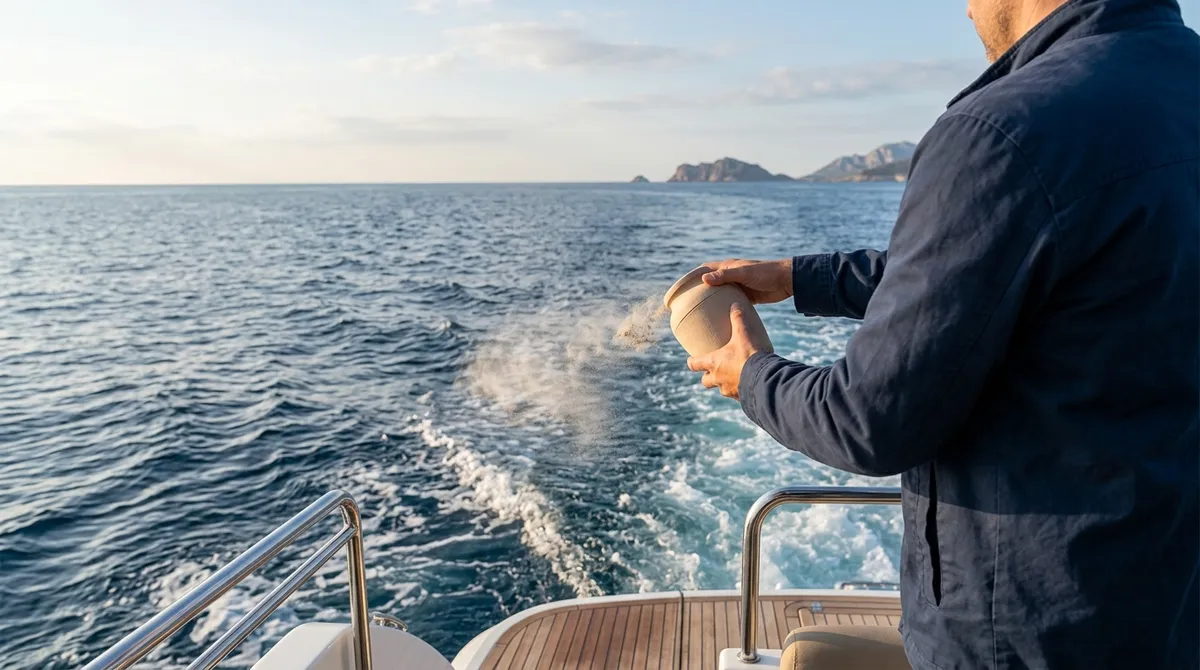
Ready to plan your ceremony? Here is a simple, step-by-step overview of how the process typically works when you book an attended charter.
- Choose your charter company. Look for experienced captains who specialize in memorial services. Read reviews and ask questions about their process before booking.
- Select your service type. Decide between attended or unattended, based on how many people plan to join and your budget.
- Pick your date and time. Morning and early afternoon departures are best. Sea conditions are typically calmest during these hours, making the ceremony more comfortable and safe.
- Prepare your biodegradable urn. If you plan to float the urn, make sure it is made from eco-friendly materials. Many charter companies provide these for you.
- Board the vessel and head offshore. The captain will navigate to at least three nautical miles from shore before beginning the ceremony.
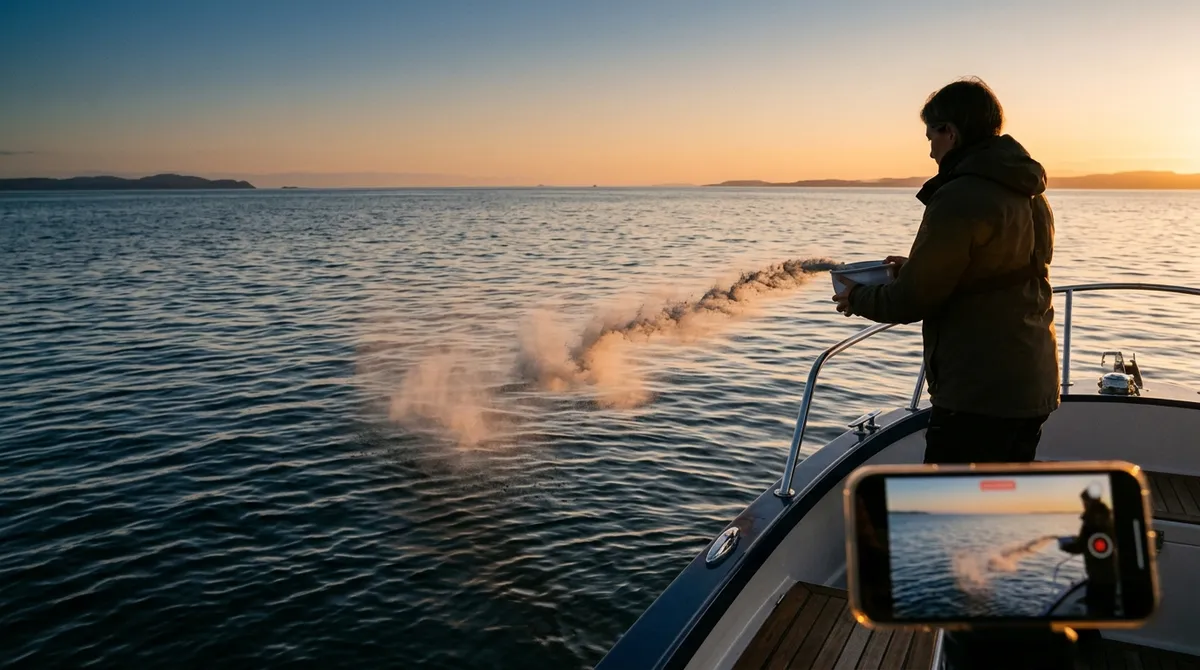
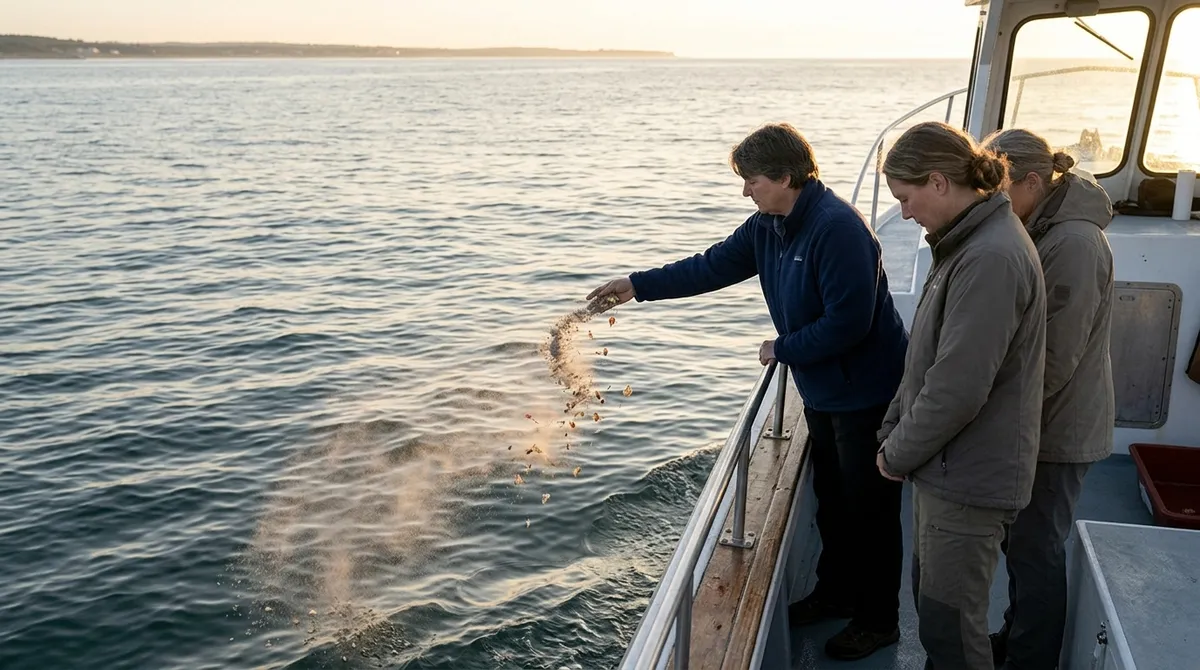
- Conduct the scattering. You may cast ashes by hand or release them in a biodegradable urn. If casting by hand, pay attention to wind direction — always cast downwind to avoid the ashes blowing back toward guests.
- Receive your documentation. After the ceremony, your captain will provide GPS coordinates of the location and a burial certificate for your records.
- Notify the EPA. Submit your notification to the EPA within 30 days. Many charter services help with this step.
For additional guidance, the ash scattering Clearwater guide to memorial boat charters is a wonderful resource for Florida families.
Scattering Methods: Which One Is Right for You?
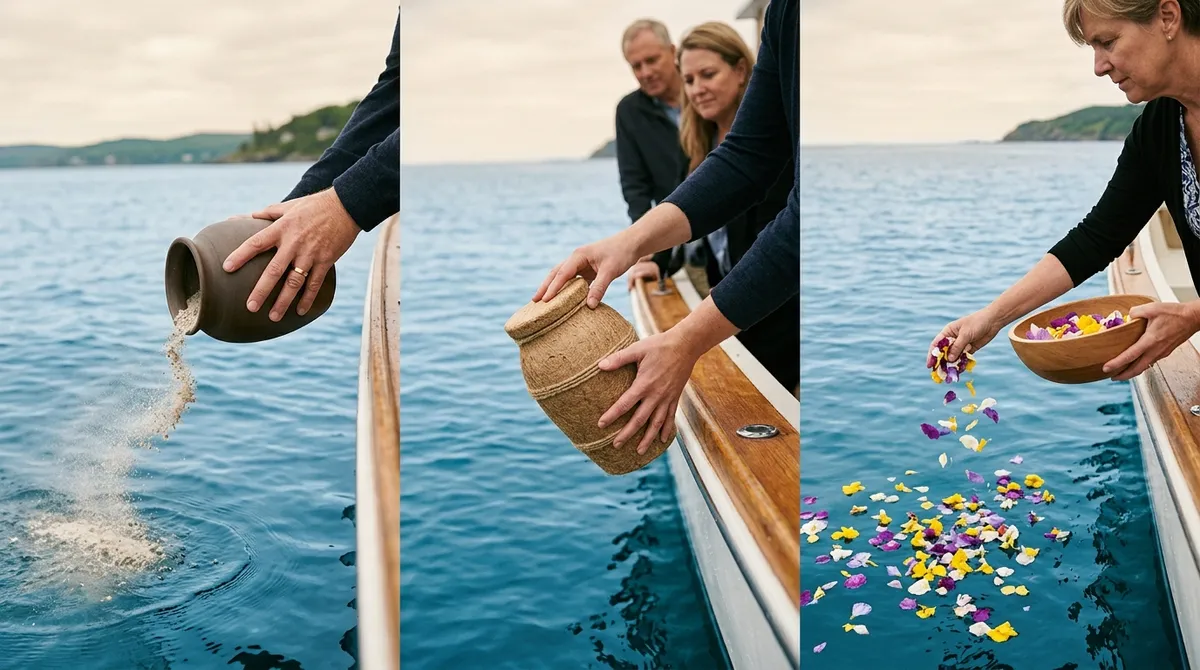
There are a couple of common ways families choose to release ashes at sea. Each has its own beauty and meaning.
| Method | Description | Things to Keep in Mind |
|---|---|---|
| Direct Hand Dispersal | Family members cast ashes directly into the water by hand | Always cast downwind; avoid gusty days |
| Biodegradable Urn Float | Ashes are placed in a biodegradable urn that floats briefly before sinking | Beautiful visual tribute; urn must be eco-friendly |
| Flower Petal Release | Flowers or petals are scattered alongside or instead of ashes | Use natural, pesticide-free flowers only |
Many families combine methods — releasing the urn and then tossing flower petals around it. It creates a visual ceremony that feels complete and meaningful. To explore more ideas, check out 5 ways a memorial service at sea honors a loved one.
What Documentation Will You Receive?
After your ceremony, your captain will provide important paperwork. This documentation matters — not just for the EPA notification, but for your own peace of mind and family records.
- GPS coordinates of the exact location where ashes were scattered
- A burial certificate confirming the date, time, and location of the ceremony
- EPA notification assistance from many charter companies
These records allow family members — even those who could not attend — to know exactly where their loved one rests. Some families even return to the same location each year for a private remembrance cruise. Read more about the documentation process in our guide on 12 things to know about ash scattering at sea in 2026.
Personalizing Your Sea Scattering Ceremony
One of the most beautiful parts of a boat charter ceremony is how personal you can make it. There is no single right way to say goodbye. Here are some ideas to help make the moment feel uniquely yours.
- Play your loved one’s favorite song as the ashes are released
- Read a poem, prayer, or personal letter aloud on deck
- Bring fresh flowers or a floral wreath to place on the water
- Take a moment of silence together before or after the scattering
- Ask guests to share a favorite memory before the ceremony begins
A skilled captain will give you the space and time to make the ceremony your own. Many charter services are experienced in memorial occasions and will follow your lead throughout. To see what makes these personalized experiences so powerful, visit what makes a personalized funeral service on the water so meaningful.
Choosing the Right Charter for Your Ceremony
Not all boat charters are the same. For a memorial service, you want a team that combines professionalism with genuine compassion. Here is what to look for when choosing your charter company.
| What to Look For | Why It Matters |
|---|---|
| Licensed, experienced captain | Ensures safe navigation to the required three nautical miles |
| Memorial service experience | Captain understands the emotional nature of the ceremony |
| Documentation provided | GPS coordinates and burial certificate are essential records |
| Biodegradable urn options | Ensures environmental compliance and a respectful ceremony |
| Flexible scheduling | Allows morning departures when seas are calmest |
Gulfside Adventures, based in Indian Rocks Beach, Florida, offers thoughtful memorial charter services on Florida’s beautiful Gulf Coast. With over a decade of experience and a compassionate team, they understand how meaningful this moment is for your family. You can also read what past guests have shared on Trip Advisor to get a sense of the care they bring to every trip.
If you are looking for a full overview of memorial boat charter services in the area, the page on burial at sea Clearwater Beach covers everything you need to know.
Tips for a Smooth and Peaceful Ceremony Day
A little preparation goes a long way in making the day feel calm and comforting. Here are a few final tips to keep in mind.
- Book a morning or early afternoon departure for the calmest water conditions
- Dress in layers — it can be cooler on the water than on land
- Bring bottled water and light snacks for guests, especially on longer charters
- Let the captain know in advance if any guests have mobility concerns
- Confirm wind direction with your captain on the day of the ceremony
For more ideas on what to expect from a memorial charter, the guide on what is burial at sea and how does a charter make it happen is full of helpful insight. You can also follow Gulfside Adventures on Facebook to stay updated on services and availability.
If you want to compare your options and learn what other families have experienced, visit us on Google — Gulfside Adventures to read real reviews from real families who have trusted us with one of life’s most meaningful moments.
Honoring a Life with Grace and Love
Learning how to scatter ashes at sea does not have to feel overwhelming. With the right charter team by your side, the entire process becomes gentle, guided, and deeply meaningful. From navigating the legal requirements to personalizing every detail of the ceremony, a great captain and crew will make sure your loved one’s farewell is everything it deserves to be.
The sea has a way of holding grief and releasing it at the same time. There is peace in watching the water carry someone you love home. And there is comfort in knowing that the moment was handled with care, respect, and all the love in the world. To learn more about planning your own ceremony with a qualified team, explore the full guide on professional ash scattering and meaningful farewells at sea.
When you are ready to take the next step, reach out to our team at Gulfside Adventures — we are here to help you plan a ceremony that feels as peaceful and personal as it should be.
FAQs
Q: How far from shore do you need to be to scatter ashes at sea legally?
A: In the United States, federal EPA regulations require that a vessel travel at least three nautical miles from shore before scattering cremated remains. Your charter captain will navigate to this distance before the ceremony begins, so you do not have to worry about a thing!
Q: Do I need a permit to scatter ashes at sea in the United States?
A: Great news — you do not need advance permission or a permit! However, you are required to notify the EPA within 30 days after the scattering takes place. Many charter companies help guide you through this simple notification process.
Q: What type of urn should I use for scattering ashes at sea?
A: You should use a biodegradable urn that is designed to float briefly before sinking naturally into the ocean. These urns are environmentally safe and comply with EPA guidelines. Many boat charter services provide biodegradable urns as part of their memorial packages.
Q: What is the difference between attended and unattended ash scattering at sea?
A: An attended scattering brings family and friends together on the boat for a shared ceremony, typically costing between $375 and $1,800 or more. An unattended scattering is performed by the captain alone, usually ranging from $100 to $425 — a thoughtful option for those who cannot be present in person.
Q: When is the best time of day to schedule an ash scattering charter?
A: Morning and early afternoon departures are generally the best choice for a sea scattering ceremony. Sea conditions tend to be calmest during these hours, which makes for a safer, more comfortable, and more peaceful experience for everyone on board.